The Top 5 Strategies for Lowering CAC Without Sacrificing Quality

Customer acquisition is critical for any business, but rising marketing costs can make it challenging to grow sustainably. The good news? There are actionable ways to lower customer acquisition cost (CAC) while maintaining the quality of your new customers.

In this article, we’ll explore the top five customer acquisition strategies that help brands reduce CAC, improve marketing ROI, and drive long-term growth.

1. Refine Your Targeting

The first step in any effective marketing plan is ensuring your ads reach the right audience at the right stage in the funnel. Narrowing your audience to those most likely to convert can significantly reduce CAC in the short term, but this is not a recommended long-term strategy.

You can lower CAC without losing quality by leveraging:

  • Broader Interest-Based Targeting on social platforms to get users into the funnel.
  • LAL (Lookalike) and Behavioral-Based Targeting for more precise messaging.
  • Retargeting strategies to re-engage users who have shown interest but didn’t convert.

By improving targeting, brands can optimize marketing spend and ensure every dollar contributes to high-quality conversions.

2. Leverage Cost-Effective Customer Acquisition Channels

Not all marketing channels are created equal when it comes to cost-effective customer acquisition. Channels like organic social media, referral programs, and content marketing can bring in high-quality leads at a fraction of paid ad costs.

CAC optimization tips for brands:

  • Here at GeistM, we utilize content marketing to prioritize digital channels that historically show lower CAC.
  • Experimenting with new channels, like TikTok or Reddit, for niche engagement.
  • Measuring ROI per channel to allocate budget efficiently.

Focusing on cost-effective channels enables brands to enhance marketing ROI without compromising lead quality.

3. Optimize Your Conversion Funnel

A leaky funnel can inflate CAC, as you spend more to replace users who drop off. Streamlining your conversion path is key to improving customer acquisition efficiency.

Tips include:

  • Simplifying forms and checkout processes.
  • Using A/B testing to identify friction points. A/B testing is your friend and will show you exactly where in the funnel you need to focus most.
  • Implementing clear calls-to-action and persuasive copy that align with user intent.

Optimizing the funnel reduces wasted spend and ensures that the leads you generate are high-quality, helping lower CAC in digital marketing campaigns.

4. Enhance Customer Retention and Lifetime Value

High churn can make CAC reductions short-lived. Investing in retention strategies ensures customers stay longer, which helps increase customer lifetime value (CLV) and effectively spreads the acquisition cost over a longer revenue period.

Strategies to consider:

  • Personalizing post-purchase experiences to enhance customer retention.
  • Creating loyalty programs or subscription models. You never want to be too promo-heavy, as this will only win in the short term and lead to a high churn rate.
  • Engaging customers with email and SMS campaigns to encourage repeat purchases.

By focusing on retention, brands can improve customer acquisition efficiency and turn existing customers into advocates, lowering the need for costly new customer acquisition.

5. Leverage Data and Analytics for Continuous Improvement

Finally, innovative brands continuously analyze performance to find ways to reduce CAC without compromising quality. Data-driven insights allow you to allocate resources wisely and make adjustments in real-time.

CAC optimization tips for brands in this area include:

  • Tracking CAC across channels and campaigns. Partnering with tried and true third-party attribution companies (TripleWhale, Measured, Klar, Northbeam) is highly recommended to improve your media channel distribution.
  • Using predictive analytics to forecast high-value leads.
  • Regularly reviewing metrics like conversion rate, CLV, and ROI.

By relying on data, marketers can optimize marketing spend, implement strategies to reduce CAC, and improve marketing ROI.

How GeistM Can Help

Lowering CAC doesn’t mean sacrificing customer quality. By refining targeting, diversifying channels, optimizing conversion funnels, enhancing retention, and leveraging data, brands can reduce acquisition costs while driving sustainable growth.

That’s where GeistM comes in. Our expert team applies advanced funnel architecture, scientific creative testing, and precise audience development to maximize the effectiveness of every dollar. With robust attribution modeling and continuous optimization, we identify and eliminate inefficiencies that inflate CAC, unlocking higher ROI and more substantial lifetime value from every customer.

Partnering with GeistM means building a scalable acquisition strategy rooted in measurable results, not vanity metrics so that you can grow faster, smarter, and more efficiently. 

Contact GeistM today to unlock sustainable growth.

Written by: Marc DeMattie

Retention vs. Acquisition: Where Should Your Marketing Dollars Go?

Marketing has its own version of a “Chicken or the Egg” problem. Which comes first, finding new customers, or nurturing the ones you already have?

Every business leader faces this same question, and the answer isn’t always obvious. While both are essential for a healthy business, the specific balance of your investment can dramatically change your trajectory.

We’re going to break down this great debate, help you understand the pros and cons of each, and show you how to find the right blend for your brand. 

What is New Customer Acquisition?

New Customer Acquisition is the process of getting new customers to try your product or service for the first time. It’s all about making a great first impression and getting them to commit.

  • Common Channels: Acquisition is powered by strategies such as paid ads on platforms like Meta, Taboola, and Google, as well as influencer marketing and SEO, which put you at the top of search results.
  • Pros: Acquisition is the engine of growth. It’s how you scale your business, enter new markets, and expand your reach. It provides a steady stream of new revenue and keeps your business from becoming stagnant.
  • Cons: It’s expensive to do right. The cost for a new customer is significantly higher than the cost of retaining existing ones.
  • Pro Tip: Acquisition can be a high-effort, low-yield game. It requires constant testing and optimisation to find the right people at the right time. Don’t be afraid to pull the plug on underperforming campaigns to focus your budget on what’s working.

What is Customer Retention?

Customer Retention is the practice of keeping the customers you already have. This is where the long-term relationship building happens. It’s about turning a single purchase into a second, a third, a fourth, and a lifetime of loyalty. The goal isn’t just about building a customer list but about cultivating a loyal brand community.

  • Common Channels: Retention strategies involve the use of powerful campaigns driven through email, SMS, and app push channels, alongside a healthy mix of paid media campaigns on social media such as Meta, X, and Reddit, not to mention your customer service.
  • Pros: Retention is often more cost-effective. Happy retained customers are not only a source of stable revenue, but also your best brand advocates. They’ll tell their friends, leave positive reviews, and organically drive new customers for you. Their Customer Lifetime Value (LTV) can be HUGE.
  • Cons: You can’t scale a business on retention alone; you still need a steady stream of new customers to fuel the first. Focusing too much on retention can also lead to a static customer base, limiting your total growth.
  • Pro Tip: Retention is not a passive game! You have to engage with your customer base and add value actively. Do it right? Your customers become your brand ambassadors, converting their friends and family. Do it wrong? They’ll run away faster and further.

Metrics that Matter: The numbers behind the decisions.

To make data-driven decisions, you need to understand these core metrics. 

  • Customer Acquisition Cost (CAC): The total cost of sales and marketing needed to acquire a single customer.
  • Customer Lifetime Value (LTV): The total revenue a single customer is expected to generate over their entire relationship with you.
  • Conversion Rate: The percentage of visitors to your site that end up doing what you want them to do.
  • Retention Rate: The percentage of customers you’ve kept over a specific period.
  • Churn Rate: The percentage of customers who stop doing business with you over a specific period.
  • Pro Tip: Your LTV should ALWAYS be higher than your CAC. This is the golden rule of profitability. If you’re spending more to get a customer than they’ll ever spend with you, then you’re going to have a bad time!

When to Focus on Acquisition 

There are clear phases in a business’s life cycle where acquisition should be the primary focus.

  • Early Stage Startups or New Product Launches: When you’re just starting out, you have no customers to retain. Your number one priority is to introduce your brand, product, or service to the world and establish your customer base.
  • Entering New Markets: If you’re an established business already and are expanding into a new country or demographic, you’re essentially a startup again. An aggressive acquisition strategy is key to building your new customer base.
  • Growth Mode: When you have a proven market fit product and a healthy LTV, it’s time to pour some petrol on the fire and get things moving. An aggressive acquisition strategy, powered by high-performing paid ads and organic channels, can help you scale quickly.

When to Focus on Retention

While acquisition is the growth engine, retention is the stability and long-term profitability that keeps the engine running smoothly. 

  • Established Customer Base: If you’ve been in business for a while, it’s often more efficient to invest in nurturing your existing customers than constantly chasing new ones.
  • High Acquisition Cost Market: In highly competitive markets, or where a market is just overly saturated, a strong retention strategy is crucial to maximising the LTV of each customer.
  • Subscription-Based Model: For companies that rely on subscription-based revenue, retention is a matter of survival. Every customer you lose is a direct hit to your bottom line, making retention strategies a top priority.
  • New Product Launches to Existing Customers: Sometimes, retention can drive acquisition. Cross-selling a new product to your existing customer base is one of the most efficient ways to launch something smoothly. Especially if this customer base already loves and trusts you!

Finding the Sweet Spot: How to Split Your Budget

Finding the perfect split isn’t an exact science; it’s a dynamic process of analysis and adjustment. 

  • Know Your Metrics: Start by looking at your data. What is your current CAC vs LTV? What is your churn rate? Why did that customer abandon their cart 17 times at 3:11 am on Sunday? The answers to these questions will reveal where you’re strong, and where you’re bleeding money.
  • Know Your Objectives: If your goal is aggressive market share growth, a heavier acquisition budget might make more sense. If your goal is sustainability, a more balanced approach could be better.
  • Build Your Feedback Loop: Your retention strategy should inform your acquisition strategy. By understanding why your most loyal customers are here, you can build better audiences for your acquisition campaigns, finding more people just like them!
  • Pro Tip: The best strategies are never static. The ratio of your budget allocations should change as your business and objectives evolve. What works for a startup won’t work for a mature company, and vice versa. Continually test and refine your budget split to match your current needs!

Why GeistM is the Perfect Partner

This isn’t a “chicken or the egg” question; it’s a “how and when” question. And that’s where a partner like GeistM becomes invaluable. We don’t believe in a one-size-fits-all approach; we believe in a holistic, data-driven strategy that makes every dollar and cent count. 

  • Holistic Strategy: We understand that acquisition and retention are two sides of the same coin. We build comprehensive strategies that integrate both, ensuring everything is balanced and effective across the entire customer journey.
  • Data-Driven Decisions: Our team of experts meticulously analyzes the CAC, LTV, and other key metrics to make informed decisions about allocations. We’ll never blindly throw money at a campaign hoping for the best. Everything we do is backed by a metric that matters.
  • The Perfect Partner: GeistM is the perfect partner for this because we don’t force you into one camp. We are flexible, agile, and capable of building custom strategies that perfectly match your business’s needs, whether that’s aggressive growth, sustainability, or a mix of both.
  • Pro Tip: The best strategies are never static. The ratio of your budget allocations should change as your business and objectives evolve. What works for a startup won’t work for a mature company, and vice versa. Continually test and refine your budget split to match your current needs!


The battle between retention and acquisition isn’t a battle at all. It’s a dance. And with the right partner, you can master the steps and build a brand that not only grows fast, but also lasts. So contact GeistM today, and we’ll take care of everything for you!

Written by: Conor Dargle

UGC vs Influencers: What’s Right For Your Ads Strategy

Have you ever stumbled across a social media post that you didn’t initially realize was an ad? Chances are, you’ve been exposed to User-Generated Content (UGC) and Influencer Marketing without even realizing it.

In today’s digital age, authenticity reigns supreme. UGC and Influencer Marketing serve as two powerful tools for brands to connect with audiences in a genuine and impactful way. From unboxing to day-in-the-life videos, everyday consumers and social media influencers are reshaping the way brands are driving engagement and how they’re perceived.

Here’s a breakdown of everything you need to know about UGC and Influencer Marketing:

What Is UGC?

UGC (User-Generated Content) is a style of photography and video typically shot using an iPhone, providing an unpolished, authentic vibe. The results offer a glimpse of what a product or service actually looks like in a real-life situation. Rather than deal with the expenses and hassle of a professional photoshoot, UGC is an affordable and successful method of creating compelling assets for social.

What Is Influencer Marketing?

Influencer Marketing involves partnering with content creators who have strong online presences and loyal audiences of potential customers. Think of influencer marketing as mini celebrity endorsements. This strategy can help you build brand awareness and generate more conversions by reaching a variety of audiences. Users can be more likely to convert if someone they follow and admire endorses the product. Because influencers specialize in crafting digital content, they can produce ads that seamlessly blend in with users’ feeds. 

*An important note: Influencers can create UGC-style ads, but not all UGC needs to originate with influencers. 

UGC vs. Influencer Marketing:

UGC is a highly affordable and agile strategy for brands to create engaging content. Influencer marketing, on the other hand, can require more budget depending on the size of the creator. 

Although UGC is a relatively simple concept, there are nuances and advanced approaches you can take to optimize results. UGC Creators are individuals who specialize in crafting authentic content that can be used by brands in their paid social strategy. They charge significantly less than influencers; with influencers, you’re paying for exposure and the ability to reach a new audience. 

With UGC creators, content is created for your brand, and your brand only — it’s not posted on the creators’ channels. Generally, the brand has full control over what is created based on the brand’s strategy and content goals.  

Influencers are valuable to brands because of their online presence. The bigger the following, the higher the cost, but also the higher the chances a product or service is seen by a new audience. Promoting products in their own distinct style that their followers know and love makes influencers’ content easy to engage with.

Influencers generally post the ads they create to their own personal accounts in order to reach their particular audience. With UGC, brands post the content directly to their own feeds in order to build credibility and trust.

Which Strategy Is Right For You?

UGC

UGC works well for lifestyle products that consumers use daily. By portraying products in a natural setting, the end result feels more organic and native to users’ feeds. This strategy can also help third-party reviews appear more authentic and trustworthy. 

UGC — whether created in-house or with an agency like GeistM — gives your business more control over the final output. We work with creators to create engaging content based on clients’ needs and goals. From the script to the final edit, creators work closely with our expert team to ensure the final content piece will resonate with audiences.

Influencer Marketing

Influencer marketing is an exceptional strategy for brands trying to break into niche markets. Many influencers focus on one specific topic, like fashion, fitness, food, or wellness. Because their followers share a similar interest, brands can reach audiences that precisely match their desired demographic. When influencers showcase products, consumers can develop a more positive association and intensify their connection with the brand.

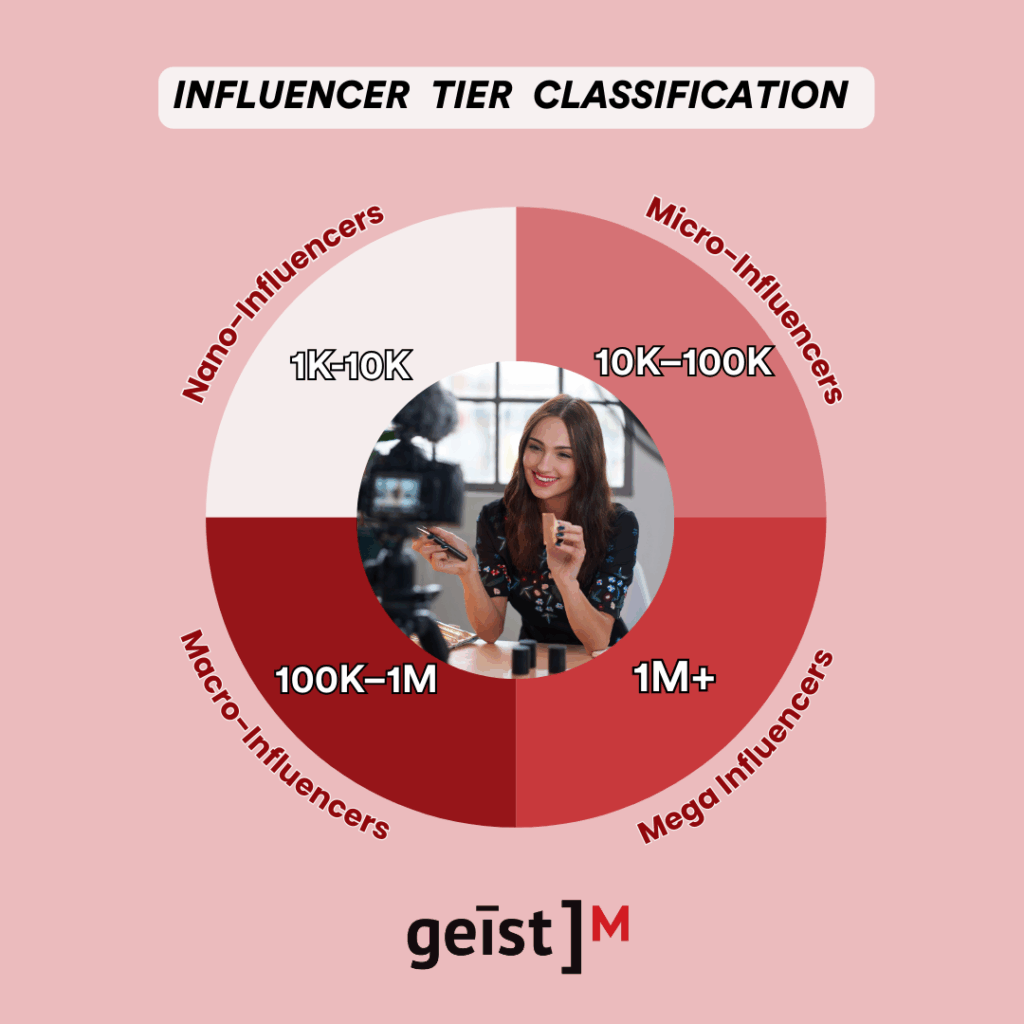
Influencers are categorized based on follower count:

Each of these groups have their own pros and cons. Nano and micro-influencers tend to have more engaged followings and charge much lower rates. Granted, their reach will be much smaller, but the higher engagement rates will make up for it. A recent study found that micro-influencers generate a 6% engagement rate on Instagram, compared to mega influencers’ 1.97% engagement rate.

Despite their high cost, partnering with macro and mega influencers also has a number of unique benefits. The first one obviously being their massive reach — getting millions of eyes on your product is invaluable for any brand. This can be great for quick sales and even garner earned media attention if the collaboration is large enough. 

GeistM Tip: Before partnering with an influencer, always check their engagement rates. Many large creators’ follower counts are not indicative of their actual reach (an account with 1 million followers that only averages a couple of hundred likes on each post is a red flag). So in order to ensure you’re getting your money’s worth, double-check whether their engagement adds up.

Overall, micro-influencers are definitely a more cost-effective option, so we only recommend partnering with macro and mega influencers if you’ve got large budgets or a specific goal in mind.

Key Takeaways

  • UGC is a cost-effective strategy for creating authentic, native content for paid media.
  • UGC is created specifically for a brand’s own platforms and ads, not posted on the creator’s channel.
  • Anyone can create UGC, but brands often work with dedicated UGC creators or agencies to meet specific needs.
  • Influencer marketing helps brands tap into niche audiences and build brand awareness.
  • Influencer marketing focuses on exposing a brand, product, or service to a new or different audience.
  • Influencers aim to influence their audience to purchase or engage, while UGC is produced for brand use, which explains the cost difference.
  • Micro-influencers offer higher engagement at lower budgets, while macro and mega influencers deliver broader reach.

Why Choose GeistM?

Are you interested in UGC or influencer marketing but don’t know where to start? GeistM is here to help. Our Growth Marketing experts will guide you based on your business and goals. We’ve developed hundreds of marketing strategies across dozens of industries and attained thousands of customers for our clients.

Our in-house creative team excels at creating beautiful UGC that will generate maximum engagement and conversion rates. We also regularly collaborate with UGC creators and influencers to help our clients’ reach specific demographics. With these tailored strategies, we pride ourselves on producing authentic content that drives serious results.

So, instead of struggling to figure this all out yourselves, contact us today!

Written by: Simon Kuflik

7 Key Skills That Make You a Proficient Digital Marketer

In today’s digital age, effective marketing strategies can make or break a business. With the vast online landscape and ever-evolving consumer behaviors, businesses must have proficient digital marketers on board. These skilled professionals possess unique abilities that enable them to successfully navigate the complexities of the digital world. 

With many corporations implementing digital marketing practices and hiring experts, let’s look at the top skills required:

1. Data Analysis and Insights

One of the fundamental skills is the ability to analyze data effectively. Digital marketing is highly data-driven, and understanding key metrics and insights can significantly impact a campaign’s success. 

An adept digital marketer can interpret data from various sources, such as website analytics, social media platforms, and advertising campaigns. By leveraging these insights, they make data-backed decisions, optimize campaigns, and identify new growth opportunities. This removes the guesswork in your marketing strategy and ensures that you generate optimal value from your marketing budget.

2. Strategic Thinking and Planning

Successful digital marketers possess strategic thinking and planning skills. They can develop a comprehensive strategy aligned with your business objectives. These professionals assess your target audience, competition, and industry trends and create roadmaps that maximize your online presence. 

A proficient marketer will consider factors like content marketing, search engine optimization (SEO), social media, email marketing, and paid advertising to develop a cohesive and effective marketing plan that drives conversions and pushes your business forward.

3. Writing & Editing

This just may be the most crucial element because content marketing is still king. Digital marketers need to understand how to source and write compelling content that makes for excellent blog posts. They also need to turn a weak piece of content into one that truly catches your audience’s attention

A great marketer has exceptional content creation and storytelling skills that captivate audiences and build brand awareness. They create relevant and convincing content tailored to different digital platforms and compose impactful messages that establish trust and build relationships.

4. Search Engine Optimization (SEO) 

Comprehending the intricacies of search engine optimization (SEO) is essential so your website and content rank higher in search engine results. Implementing effective SEO strategies can increase your website’s visibility, improve organic traffic, and generate valuable leads.

Digital marketing experts are skilled in keyword research, on-page optimization, link building, and technical SEO aspects. They’re aware that Google’s algorithm is constantly changing, and that they need to look out for what’s trending to ensure your content reaches the ideal target audience.

5. Conversion Rate Optimization 

The goal of every marketing campaign is to drive traffic to a site and capture customers. Conversion rate optimization involves testing various web pages, content pieces, calls-to-action, ads, and more to see what converts the best. 

Digital marketers have to run intelligent A/B tests, gain data and make the necessary strategic adjustments to increase revenue per visitor, acquire customers, and continuously grow your business.

6. Graphic Design & Video 

Much of today’s marketing world is driven by visuals. Content across a variety of platforms performs better when accompanied by thoughtfully designed graphics. If you want to target your audience with high-performance ads, you should create and edit your own visuals – from banner ads, email banners, and logos to short videos with and without voiceovers. 

We all know that videos are taking over the internet due to their higher engagements, conversion rates, and SEO rankings. Many programs – Photoshop, Illustrator, Premiere Rush, and more – can help you create excellent visual content. 

7. Continuous Learning and Adaptability

The digital landscape is ever-changing, with new technologies, platforms, and trends emerging daily. A proficient digital marketer is hungry for knowledge and committed to continuous learning. They keep up-to-date with industry trends, algorithm shifts, and evolving consumer behavior

By keeping their skills sharp, digital marketers deftly adapt and form innovative strategies that ensure your business remains ahead of the curve. Some ways to do this are maintaining online certifications (Google Analytics Excel, Adobe, etc), following the latest industry news from reputable sources (Ad Age, Mashable, etc), and attending webinar training sessions through networking sites like LinkedIn. 

Becoming a proficient digital marketer requires a diverse skill set and a deep understanding of the digital landscape. By mastering data analysis, strategic thinking, content creation, SEO, and adaptability, you can take your efforts to new heights. However, navigating the complexities of digital marketing can be challenging if you don’t have access to the right expertise. That’s where our digital marketing agency comes into play. 

At GeistM, we pride ourselves on possessing all the essential skills for proficient digital marketing. Our team comprises data-driven analysts, strategic thinkers, creative content creators, SEO experts, and adaptive professionals. We combine our expertise and experience to create tailored digital marketing solutions for diverse clients from various industries, to drive tangible results for your business. Contact us today!