Top Marketing Trends for 2026: Performance, Digital, Content & AI Strategies Redefining Growth

Marketing is entering a new era. The most successful digital marketing strategies for 2026 are powered by trust, creativity, and automation that actually perform. From AI in marketing to content and influencer marketing trends, 2026 will demand precision, transparency, and better measurement across every channel.

Looking Back at 2025 — What Actually Happened

Before we map 2026, a quick reality check on what shaped 2025:

  • Authenticity won out. Micro- and nano-influencers consistently beat celebrity blasts on engagement and trust.
  • Retention rose in priority. With higher media costs, teams invested more in loyalty, re-purchase flows, and win-backs.
  • First-party data moved centre stage. Brands built stronger collection points (quizzes, forms, loyalty) and cleaner pipelines for segmentation and measurement.
  • Ad mixes diversified. Marketers tested CTV, native, and commerce media to reduce reliance on a single walled garden.
  • Content met commerce. Shoppable video and live formats shifted from pilot tests to everyday tactics.
  • AI entered production. Generative tools sped up creative and copy, while ethics and disclosure became part of the brief.

Why it matters for 2026: these outcomes set today’s baseline. The job now isn’t to “try” them — it’s to systemise, measure, and scale them with better data, AI oversight, and clearer ROI guardrails.

Here’s what every marketer should prioritise now:

1. Influencer Marketing 2026: The Creator Economy Matures

Micro- and nano-influencers remain highly effective for trust and niche relevance. In 2026, brands will increasingly combine them with larger creators who bring scale alongside performance measurement.

How to make it work:

  • Use creator marketplaces (e.g., Collabstr, TikTok Creator Marketplace, Meta tools) to identify high-engagement talent.
  • Structure partnerships over 6-12 months with specific KPIs tied to outcomes like repeat purchase or new signup.
  • Integrate influencer content into the overall performance marketing strategy for full-funnel visibility.

2. Digital Marketing Strategies 2026: Loyalty Outperforms Acquisition

With rising media costs and data limitations, retention and loyalty are becoming as important as new-customer acquisition.

Action steps:

  • Develop loyalty programs and automated flows to increase repeat purchase rates.
  • Use interactive content (surveys, quizzes, loyalty offers) to collect zero-party/first-party data for future targeting.
  • Allocate budget with an eye toward lifetime value and re-engagement, not just initial conversion.

3. Performance Marketing Trends 2026: Privacy, First-Party Data & Clean Rooms

Third-party cookies are no longer the sole focus — performance marketers now must build robust first-party data ecosystems and privacy-safe infrastructure.

Key strategies:

  • Create interactive data capture methods (quizzes, gated content, loyalty sign-ups).
  • Enable clean-room partnerships (e.g., using AWS Clean Rooms or Snowflake) to link data while respecting privacy.
  • Shift from granular third-party targeting to behavioural cohorts built on your own data assets.

4. Retail & Commerce Media Take Centre Stage

Retail media networks (RMNs) and commerce media channels are experiencing rapid growth and are expected to capture a larger share of ad spend in 2026. For example, worldwide retail media advertising was projected at $169 billion in 2025

What brands should do:

  • Activate with major RMNs (Amazon Ads, Walmart Connect, Instacart Ads) while aligning with your performance funnel.
  • Use retailer-owned data for remarketing and repeat purchases.
  • Integrate RMN campaign outcomes into your measurement stack for incrementality and long-term value.

5. Content Marketing Trends 2026: Shoppable Everything

Content is no longer just storytelling — it’s commerce. Shoppable video, livestream shopping, and integrated commerce experiences will be must-haves in 2026. For example, experts estimate live commerce could account for up to 20% of e-commerce transactions by 2026.

What to test:

  • Embed product links in videos and social posts (“Watch & Buy” formats).
  • Host livestream shopping events with products, Q&A, and exclusive offers.
  • Expand into CTV (connected TV) or second-screen video formats that allow direct product actions.

6. AI in Marketing 2026: From Tools to Agents

Generative AI is already widely used; in 2026 the focus turns to AI agents — systems that can plan, execute and optimize campaigns autonomously while remaining under human oversight.

Best practices:

  • Use AI for creative generation, media testing and optimization workflows, but maintain human review for brand tone and trust.
  • Be transparent: indicate when AI is part of your campaign creation (“Co-created with AI”).
  • Combine AI insights with your own first-party data to personalize experiences authentically and ethically.

7. Optimising for AI Assistants & Voice Search

As AI-driven search (e.g., ChatGPT, Gemini, Perplexity) shapes user behaviour, marketers must optimise content for natural-language queries and FAQ formats.

Practical steps:

  • Structure content with clear Q&A markup and long-tail phrases.
  • Add FAQ schema to appear in featured snippets and AI answers.
  • Prioritise helpful, human language over keyword stuffing.

8. Measurement Reset: Incrementality over Attribution

As ad channels fragment and data signals become more complex, measurement needs to evolve. Linear attribution is no longer enough.

How to adapt:

  • Conduct incrementality tests (hold-out groups, geo tests) to isolate media impact.
  • Adopt media mix modelling (MMM) alongside analytics that track creative fatigue and engagement decay.
  • Build dashboards that tie performance back to lifetime value, not just last-click conversions.

9. Ad Spend Outlook & Media Inflation

Global ad spending is still growing, though at a moderating pace: recent forecasts indicate a rise of 7.4% in 2025 to ~US$1.17 trillion, and 8.1% in 2026 to ~US$1.27 trillion.

Implications for marketers:

  • Plan for higher CPMs and longer learning curves for new channels.
  • Emphasise budget flexibility, creative testing cadence, and channel diversification.
  • Prepare media buying strategies that account for inflation and shifting mix (digital continuing to dominate).

Key Takeaways for 2026 Marketing

  • Automate with clarity. AI agents powers are real — but transparency and human oversight build trust.
  • Own your data. First-party data, clean-rooms and loyalty ecosystems are now foundational.
  • Invest in commerce-enabled content. Shoppable video and retail media channels are expanding rapidly.
  • Measure smarter. Incrementality, MMM and lifetime value tie campaigns to long-term impact.
  • Stay agile. As performance marketing trends 2026 emerge, the brands that test, learn and pivot fastest will win.

Ready to dive deeper and truly transform your marketing strategy this year? Contact GeistM to see how we can help elevate your game in 2026 and beyond. Let’s make it a year to remember!

AI agents, retail and commerce media, shoppable and immersive content, voice and AI-assistant search optimisation, stronger first-party data strategies, and modern measurement (MMM + incrementality) are the key trends shaping digital and performance marketing in 2026.

Prioritise helpful, natural-language content structured as questions and answers, add FAQ and How-To schema where appropriate, use concise definitions and summaries, and ensure authoritative sourcing so your answers are eligible for AI-generated results and featured snippets.

Yes. A hybrid approach works best: long-term partnerships with micro or nano creators for trust and niche relevance, complemented by larger creators for efficient reach. Tie creator activity to concrete KPIs like repeat purchase, ROAS, and lifetime value.

Own first-party data, activate retail and commerce media, deploy AI for creative testing and predictive optimisation with human oversight, use shoppable video and live commerce, and measure impact with incrementality tests and media mix modelling rather than last-click attribution.

Very. Owned brand communities (e.g., Discord, private apps) build durable engagement and first-party insights, while clear sustainability reporting and purpose-led messaging help build trust and drive retention.

Expect continued reallocation towards retail media, search within retailer ecosystems, CTV and video, and high-performing paid social. Plan for longer learning phases and higher CPMs, and reserve budget for creative refreshes and testing.


UGC 101: Future Trends in UGC and How to Stay Ahead

If you use social media, then you’ve definitely encountered UGC (user-generated content) before.

UGC is any form of content — like photos, videos, or reviews — created by consumers or creators rather than brands. Typically shot with an iPhone, this type of content feels more native and relatable compared to polished, professional assets.

Brands everywhere are already tapping into UGC — posting it on social media, within email campaigns, and directly on product pages.

So what does the future of UGC look like?

Emerging Technologies: The Role of AI and Other Technologies in Shaping UGC.

In theory, UGC and AI seem like complete opposites. UGC is human-generated and relatable, whereas AI assets are computer-generated and often lack emotion. But they can actually work in tandem…

The most obvious example would be AI-generated content that looks like UGC. This can be done by utilizing UGC references to inform AI image/video creation.

Popular editing apps already offer AI Avatars that mimic UGC creators. With text-to-speech features, you can create convincing testimonials, skits, and podcast-style clips about your brand in seconds.

Other ways to combine AI with UGC include:

  • Generating AI backgrounds for UGC images (great for seasonal promos)
  • Creating AI voiceovers to play over UGC videos (can test different personas)
  • Expanding UGC images with AI to fit different aspect ratios/placements
  • Transforming a UGC static image into an AI video (motion assets)

These strategies allow for one asset to be turned into countless ads, which is ideal for testing different messaging and styles.

Another new technology making waves in the UGC space is smart glasses. Products like the new Ray-Ban Meta Glasses are already becoming a popular method of recording UGC videos. These allow creators to shoot videos hands-free, perfect for cooking, IRL experiences, interviews, and product demos.

Standard UGC will still likely be a popular format, but incorporating newer technologies is definitely a smart move going forward.

Changing Consumer Behaviors: How evolving preferences might influence UGC strategies.

Over the past decade, consumer preferences related to UGC have undergone significant shifts — influenced by technological advancements, the rise of short-form content, and evolving expectations from brands. 

Here are 3 trends you should consider:

1. Shift from Influencer Content to UGC

Believe it or not, influencer marketing has recently taken a backseat to UGC. People now feel UGC is 9.8X more impactful than influencer content. 

Brands will likely shift away from big influencer campaigns and lean into user reviews, unless a specific influencer is a perfect fit. Plus, it’s far more cost-effective to partner with micro-influencers and creators over big names.

2. Websites Incorporating UGC

According to a recent study, User-generated content results in 29% higher web conversions than campaigns or websites without it. 

Therefore, more websites will start to include UGC photos and videos on landing pages and within product descriptions. Not only does this provide social proof, but it also gives consumers more realistic portrayals of products. Flashy websites look cool, but websites with UGC convert.

3. Emphasis on Authenticity Over Perfection

The push for flawless, curated content is on the decline. Today, authenticity reigns supreme — 90% of consumers say authenticity is important when deciding which brands they like and support. 

UGC is a prime example of this trend; consumers want to see how a product fits into real life, not just how it looks in a studio shot.

When using AI, ensure it feels realistic, or else you may encounter pushback. This trend also enables brands to be more agile with their content strategy, allowing them to shoot and post within a couple of hours. 

At the end of the day, brands that embrace raw, genuine content will resonate more with modern audiences.

Strategic Planning: How to prepare and adapt to future trends in UGC.

As UGC trends continue to evolve, it’s essential to stay organized and keep up with the latest tech. Here are 3 steps to stay ahead of the curve:

1. Keep an organized asset library of top-performing UGC

Organizing all your UGC in one place will ensure you’re able to jump on any new trends/tech quickly. For example, if a new AI feature rolls out, you can easily apply it to assets that you already know perform well.

Also, if you’re looking to incorporate UGC onto your product pages or email campaigns, this library will make implementation far easier. (Pro Tip: Organize assets by product type and target audience).

2. Test, Test, Test.

There’s only one real way to know if a new style works — testing. Including as many variations as possible can help inform what actually drives results. For example, when using AI voice-overs for videos, try different hooks and voices.

If a specific UGC asset isn’t performing well, try various music, captions, messaging, or placements before giving up on it. Sometimes a small tweak, such as font or color, can make a huge difference.

3. Stay in the know.

This one might be obvious, but keeping up with the latest trends and tech is crucial for creating future UGC. We recommend subscribing to relevant newsletters, following popular creators/brands, and social listening.

Another great way to learn about new styles is with Meta Ads Library. This tool allows you to see all the ads that brands are running (and when they launched them). Viewing competitors’ and other brands’ ads can serve as great inspiration and research for your own strategies. Of course, always add your own twist and do not copy ads directly. 

To Recap…

UGC and new technologies can work together: Combining AI with user-generated content can help scale your content creation and provide more diverse options for testing and optimization.

Consumer preferences are shifting: UGC is now more impactful than influencer and branded content, leading to a move toward user reviews and websites that feel more like social feeds.

Strategic planning is essential: Organizing your UGC library, testing various styles, and staying up-to-date with new trends and tech will help you remain competitive.

It’s clear that the content game is changing, and wherever it goes, UGC will play a big role.

How GeistM can help

At GeistM, we understand that the future of UGC isn’t just about capturing content — it’s about leveraging technology, authenticity, and strategy to make every asset work harder for your brand. Our in-house creative team specializes in producing high-performing UGC that feels genuine, scalable, and always ahead of the curve. Whether it’s integrating AI to repurpose assets across multiple placements, developing content libraries tailored for ongoing testing, or identifying new formats like smart-glasses video, GeistM ensures your brand never falls behind

By combining data-driven insights with cutting-edge creativity, we help brands stay relevant, resonate with modern audiences, and turn authentic storytelling into measurable performance. Ready to future-proof your UGC strategy? Contact us today! 

Written by: Simon Kuflik

UGC 101: Strategies to Leverage User-Generated Content Across Every Marketing Channel

User-Generated Content (UGC) isn’t just a buzzword — it’s one of the most effective ways to build trust, expand reach, and drive conversions for your brand.

UGC typically consists of raw, unedited content created by users and shot with their personal phones. These images and videos provide a more authentic feel compared to high-budget, commercial photoshoots.

A recent study found that 56% of consumers say they are more likely to buy a product after seeing it featured in a relatable or positive UGC photo.

In other words, people trust people (not brands).

Social media is the natural starting point for UGC, but it shouldn’t stop there. Here’s a full breakdown on how to fully activate your UGC marketing efforts across social, email, website, and even IRL (yes, offline still matters too).

Social Media Integration: Make UGC the Heart of Your Feed

UGC originated on social media and thrives on platforms such as TikTok, Instagram Reels, and Instagram Stories. Many brands simply repost user content, but miss out on opportunities to take their UGC strategy to the next level.

Here are 3 Ways to Elevate Your UGC on Social Media:

1. Adapt UGC specifically for each social platform

  • Consider audience demographics and adjust caption language to fit them. Add text overlays with relevant lingo.
  • Experiment with trending sounds to make your content feel more native.
  • Test story vs. feed placements to see which drives more engagement.
  • Trim longer videos into more digestible, shorter form content.
  • Add interactive features, such as polls, questions, and sliders, to Stories.

2. Create a UGC-focused series on your feed

  • Showcase your product in a variety of settings with a carousel post.
  • Highlight the diversity of your audience.
  • Prompt users to post organically about your brand with hopes of getting featured on your page.
  • Build brand trust by showing how you’re listening to your followers.

3. Convert high-performing UGC into paid social ads

  • Utilize social media analytics to determine which content will work best for your ads.
  • Add call-to-actions and sale promos to drive conversions.
  • Combine UGC with traditional ads to give them a new twist.
  • Create collaborative ads with users or influencers and leverage their following or handles.

With these strategies, one UGC asset can easily become dozens of high-performing social posts. The best part? UGC costs 50% less than traditional ads and delivers 4x higher click-through rates.

Email and Website: Bring UGC Into the Conversion Funnel

Many brands limit their UGC marketing strategy exclusively to top-of-funnel content. By incorporating UGC into your email flows and website, you can further build trust and strengthen your overall consumer experience.

Recent studies have shown that UGC improves email click-through rates by 73% and product pages with UGC experience a 91% lift in conversion rates.

Here’s How to Embed UGC Deeper into Your Digital Experience:

Email Marketing:

  • Plug UGC into your welcome series. Showcase real customers using the product — instant social proof.
  • Try a “fan-favorite” section featuring creator or customer quotes.
  • Use UGC in post-purchase upsells — seeing how others styled or used the product can drive repeat orders.
  • Experiment with UGC for new product announcements to generate hype.

On-Site UGC Strategy:

  • Add a “See it IRL” section under product photos to help consumers picture themselves with the product. (e.g., for fashion brands, users can better understand sizing with UGC examples)
  • Embed TikToks or Reels directly on product pages to showcase virality.
  • Feature rotating UGC on your homepage to spotlight your community (e.g. Fabletics does a great job showcasing social proof).
  • Pair UGC with product reviews — a picture is worth a thousand words.

When users see others loving your brand across emails and your site, it creates the nudge they need to click “Add to Cart.” Overall, this can make your brand feel more “human” and better resonate with your customers — especially when they see users who look like them using your products.

Offline Channels: Yes, You Can Bring UGC Into the Real World

UGC doesn’t need to live and die online. Agile brands are taking their user-generated content offline and turning it into tangible trust builders at retail, events, and beyond.

Some ideas for bringing UGC to life:

  • Print Lookbooks or Postcards that incorporate UGC for packaging inserts.
  • In-Store Displays that feature customer testimonials or top-performing UGC frames.
  • QR Codes on Packaging linking to UGC video tutorials, recipes, or style guides.
  • OOH Advertising can integrate UGC onto billboards and public transport to stand out and build trust.

The bottom line is that UGC is portable. Whether your product is sitting on a store shelf or your brand is hosting a pop-up, showing real people using your product makes it feel less like marketing — and more like a recommendation from a friend.

UGC Works — But Only When It’s Strategic

? Quick Recap:

  • Social media is your playground — use UGC to stay native and consistent.
  • Emails and websites should lean into UGC for trust and conversion.
  • Offline isn’t dead — bring UGC into the real world for in-person authenticity.

Why Partner with GeistM?

We’re not just a UGC agency — we’re a performance powerhouse. At GeistM, our in-house expert team combines high-impact UGC creation with strategic distribution across all channels. From TikTok-style videos to Instagram-worthy style inspo, we help brands create UGC that converts.

Let us help you turn likes and comments into clicks and conversions. Reach out to GeistM today to unlock your next wave of UGC-driven growth.

Written by: Simon Kuflik

Human vs AI: Why Storytelling Still Wins in Modern Marketing

The surge of Generative AI mirrors past shifts, such as the automation of customer service (i.e. AI chatbots) or the rise of programmatic ad buying. These technological developments changed the game but didn’t erase the need for human insight. 

Blogs, emails, ad copy, product descriptions — you name it, conversational AI chatbots, such as ChatGPT, can generate them in seconds. It’s fast. It’s scalable. And most of the time, it works pretty well. But it still needs a human to edit and fact-check the content.

But there’s a fundamental truth every savvy marketer understands: it’s not just words that make people care. It’s stories. And this is exactly where AI hits its limit. Sure, AI can create content that looks and sounds impressive on the surface, but does it truly grasp the human emotions behind those words? Does it understand what moves us, inspires us, or connects us? 

As powerful as AI has become, it’s not replacing authentic human storytelling anytime soon. In a world overflowing with algorithm-driven content, authentic storytelling is becoming a rare and valuable edge — one only humans can truly deliver.

Let’s dive into why that is.

The Rise of AI Content: A Double-Edged Sword

In recent years, AI-generated content has seen a significant rise, and a number of tools have revolutionized this new era of writing. 
AI writing tools can rapidly produce large volumes of content, mimic diverse writing styles, and synthesize information from vast datasets, enabling marketers and creators to speed up routine tasks and draft ideas more efficiently. 

Reports suggest that 62% of marketers use AI tools for content creation, highlighting the growing reliance on AI in the industry. AI can certainly accelerate content production, but faster doesn’t always mean better — especially in marketing, where quality often outweighs quantity. 

While AI excels at generating content through pattern recognition and statistical prediction, it lacks accurate understanding. It doesn’t comprehend the meaning behind the words it creates or the emotions they’re meant to evoke. And that’s the core limitation.

What Storytelling Truly Means

From ancient cave paintings to TikTok trends, humans are hardwired to respond to narrative patterns. It’s how we make sense of the world. Unlike data, stories invite the listener in. They create space for empathy, relatability, and imagination. 

Studies show that stories are up to 22 times more memorable than standalone facts, making narratives an ideal way to imprint your brand in consumers’ minds. When you embed numbers inside stories, listeners retain around 65–70% of the information, compared to just 5–10% when they are presented as standalone facts. 

This emotional resonance directly drives business results: brands that use storytelling see a 30% boost in conversion rates, 20% higher customer loyalty, and even a 30% increase in perceived value for their products. 

Authenticity plays a central role — 86% of consumers say that authenticity influences the brands they support, while 64% demand an emotional connection with the brands they choose. 

Storytelling isn’t mere embellishment; it’s scientifically proven to enhance recall, build trust, and inspire action in ways that raw facts simply can’t. For marketers, mastering the art of storytelling is no longer optional; it’s critical.

Via Canva.com

4 Reasons Why AI-Generated Content Misses the Mark — And How Humans Fill the Gap

As powerful as AI is, there are simply some things it cannot do. While it may have a “brain,” countless complex concepts remain far beyond its reach. Unlike machines, humans bring a nuanced understanding of storytelling that goes beyond word generation. While machines can generate words, only humans bring the emotional depth, cultural awareness, and ethical reasoning that make stories feel authentic, relatable, and impactful.

1. Lack of Genuine Emotion, Empathy & Adaptiveness

Consider the Coca-Cola AI ad controversy. It tried to capture the nostalgia of their iconic 90s ad but missed the mark. While it can sometimes use the “right” words to mimic emotional tone, it doesn’t understand the why behind them. That gap matters, especially in marketing. 

In today’s fast-moving digital space, human storytellers constantly monitor audience reactions and adapt in real-time. During a social media backlash, for instance, marketing teams can quickly pivot their tone by offering sincere apologies, clarifying misunderstandings, or spotlighting positive stories to rebuild trust. This kind of responsiveness requires emotional intelligence, cultural sensitivity, and strategic thinking — skills AI can’t replicate. Human adaptability ensures brands stay connected and credible amid ever-evolving conversations.

Consumers can sense when something is emotionally authentic versus when it merely appears to be so. True storytelling requires not just expressing emotion, but also responding to it in a way that shows understanding and care. 

For example, AI-generated product descriptions may list features well, but they often fail to capture the emotional relief or joy a user feels when the product actually makes a difference in their life. 

2. No Personal Experience or Perspective

Stories gain power from perspective. A founder’s struggle through startup failures, a parent’s reflection on raising a child during a pandemic — these aren’t just facts. They’re infused with memory, meaning, and personal transformation. 

AI lacks any lived experience. As a result, its narratives often feel detached or overly generic, like they’ve been assembled rather than felt

For example, human marketers share stories about how products fit into real customer lifestyles, such as an athlete’s journey with new running shoes, which adds credibility and authenticity that AI-generated, generic use cases can’t match. 

This is where human creativity shines. We don’t just retell what’s been done; we experiment with humor, irony, and unexpected metaphors that spark curiosity. A brand launching a disruptive product might use bold humor or interactive formats — like quizzes or choose-your-own-adventure videos — to create experiences that captivate. These creative leaps are born from intuition and cultural awareness, which AI can’t predict or invent. By embracing risk, human storytellers create memorable moments that linger long after the campaign ends.

Via Canva.com

3. Lacking Morality, Meaning, and Relationship-Building

The best narratives don’t just inform, they question, challenge, inspire, and reflect our collective ethics. A powerful campaign can spotlight inequality, advocate for sustainability, or shift public attitudes. Because a human chose to tell that story with intention. 

By contrast, AI lacks a conscience. It can mimic moral language, but it doesn’t stand for anything. 

For example, brands committed to sustainability often use storytelling to communicate their values and the ethical choices behind their products.

Storytelling is not a one-off event; it’s a long-term relationship. Marketers understand that establishing a brand personality requires consistency and thoughtful evolution. They know when to stick to core values and when to adapt. A company might share behind-the-scenes product development stories, spotlight employee voices, or feature customer testimonials. These real, ongoing narratives build trust and emotional investment — turning customers into advocates.

4. Difficulty with Cultural and Contextual Themes 

Stories don’t exist in isolation; they live within culture. The tone, humor, symbolism, and even word choice that works for one audience might completely miss the mark with another. They can adjust their voice and message to meet people where they are. 

AI may reproduce stereotypes, misread cultural references, or fail to grasp the emotional temperature of a moment. And in an era of heightened cultural awareness, that can have real reputational consequences.

For example, launching a product in a diverse international market requires tailored messaging that respects local customs and languages. Human marketers excel at tailoring campaigns with nuance, avoiding tone-deaf mistakes and connecting in culturally relevant ways.

Today’s best campaigns often weave together complex themes, such as product innovation, social responsibility, and emotional relevance, into cohesive stories. Human storytellers interpret these layers and craft messages that resonate on multiple levels. A tech company might promote a new device by highlighting its cutting-edge features, the ethical sourcing of its materials, and the positive impact it has on users’ lives. Balancing these dimensions requires empathy, judgment, and creativity — qualities that machines simply can’t replicate.

Via Canva.com

Finding The Best of Both Worlds

Think of AI as GPS, great at providing directions, but humans are the drivers who choose the destination, speed, and stops along the way. 

AI excels at automating the tedious aspects of the content creation process — it can analyze vast datasets, draft outlines, suggest relevant keywords, generate content variants, and optimize for both SEO and readability. These strengths free up time and mental space for creators, allowing them to focus on higher-order storytelling. 

This collaboration can be especially powerful in marketing, where deadlines are tight and expectations are high. For instance, a content strategist might use AI to help develop ideas and utilize it as a research tool to understand why customers might need the product. 

When used thoughtfully, AI can be the assistant, never the author. The goal isn’t to replace human creativity but to amplify it, unlocking greater efficiency without losing what makes stories meaningful. In this hybrid model, AI accelerates the how, while humans define the why. And that’s where the magic happens.

Final Thoughts: What Makes GeistM Different

At GeistM, our mission isn’t just to create content; it’s to create authentic conversations that lead to action. In a world where AI-generated copy is becoming increasingly common (and often indistinguishable), we take a different approach: every piece of content we deliver is crafted by our exclusive, in-house content team. These aren’t generic blog posts; they’re original, thoughtfully written assets designed to serve a specific purpose, resonate with a distinct audience, and align seamlessly with campaign goals.

What sets us apart is the human intelligence behind every word. Our expert storytellers understand not just what to say, but how, when, and where to say it. We tailor each content asset not only to the campaign’s core objectives, but also to the platforms on which it will live. It’s about voice, value, and vision.

That’s the GeistM edge: we don’t just use storytelling as a tactic — we use it as our core strategy. Because when content is built by humans, for humans, it doesn’t just inform; it influences and drives results.

Ready to create content that actually connects? Let’s build something unforgettable together. Reach out to GeistM today.

Written by: Nitanti Alur

UGC 101: Step-by-Step Guide to Implementing a Successful UGC Strategy

Why do so many brands post unpolished, raw social media content nowadays?

It’s called UGC (user-generated content) and allows for more native, relatable, and authentic connections with consumers. A recent study showed that UGC-based ads receive 4x higher click-through rates than traditional ads.

So here’s a full breakdown on developing and executing a UGC strategy that resonates with users and drives results.

Step 1: Setting Objectives

Like any ad campaign, a successful UGC strategy starts with defining clear goals. A few things to narrow down should be:

  • Are you looking to increase brand awareness or drive sales?
  • Who is your target audience?
  • What platforms will you be using?
  • Do you want to prioritize static or video content?
  • What value propositions or messaging are you trying to highlight?
  • Does partnering with influencers make sense for this campaign?

Determining the right audience, channels, and messaging is crucial for developing strong UGC. For example, younger audiences will connect better with trending TikTok-style content, whereas older demographics may respond better to testimonial videos. The best UGC blends seamlessly into what users already see on their social media feeds.

Research viral content formats and see if they would work for your brand: unboxing videos, GRWM, hauls, day-in-the-life vlogs, ASMR — all the inspiration you need is on social media.

Depending on your messaging and target audience, partnering with influencers can provide social proof, expand your reach, and drive higher engagement. The key is collaborating with influencers whose values align with your brand, ensuring the partnership feels natural to their audience.

Step 2: Content Creation and Collection

Now that you’ve established your objectives, it’s time to source the most suitable UGC content for your campaign. 

Creating UGC content can be as simple as taking a picture or video of a product with your phone. To get the best results, our UGC experts recommend:

  • Using bright, natural lighting.
  • Positioning the product in a realistic setting.
  • Featuring handheld shots to showcase the product more naturally.
  • Avoiding overly branded scripts or messaging and leaning into more casual language.
  • Utilizing strong hooks and CTAs to grab users’ attention.

Although it can be simple to create yourself, outsourcing UGC content is also a great option. Partnering with influencers, creators, and UGC agencies, like GeistM, allows the experts to handle creative, so you can focus on running the ads.

Another way to collect UGC is by tapping directly into your users. Many consumers organically post about the brands they love, which you can directly recycle for ads. Ensure you get users’ permission, and then you can build a comprehensive library of authentic content.

Step 3: Implementation and Management

After building your collection of UGC, now you need to figure out the best way to distribute and manage it. We recommend testing various styles across platforms, then doubling down on what’s working best. 

One UGC video can be repurposed into countless ads with different music, voiceovers, and messaging. Experiment with positive vs. negative messaging and feed vs. story placements to see where your content drives the most engagement. You can also tap into AI tools to change the backgrounds of images and create lifelike voiceovers, instantly.

Once your content is live, watch the engagement levels and comment sections closely. How are users reacting to your content? This can serve as a direct feedback loop to optimize assets and an opportunity to respond to users’ questions. Understanding the sentiment within your comment section can help you build more informed content in the future.

And if you’ve spent all this time and effort developing UGC, but it doesn’t end up performing well, here are some common mistakes to avoid:

  • Adhering to strict brand guidelines (ends up feeling sponsored and inauthentic).
  • Forgetting to tailor content for each platform — adjusting captions, video length, and aspect ratios for appropriate channels, and following the platform safe zones (where your text will get cut off).
  • Not designing for sound-off — utilize captions.
  • Not including a strong hook or showing the product within the first 3 seconds.

To recap…

UGC Drives Results: User-generated content generates 4x higher click-through rates than traditional brand ads.

Start with Clear Objectives: Define your campaign goals, audience, platforms, and messaging before creating and collecting content.

UGC Content Should Feel Natural: Platform-specific content that feels native will resonate better with users. Utilize natural lighting, realistic settings, and trending formats. and strong hooks for maximum engagement.

Test, Adapt, Optimize: Experiment with different styles and formats, repurpose content across platforms, and closely monitor engagement for future optimizations.

Why You Need GeistM 

At GeistM, we’re a performance marketing agency specializing in high-impact, authentic UGC, crafted end-to-end by our in-house creative experts. Not only do we produce scroll-stopping content, but our paid-social strategists integrate it into optimized campaigns that deliver measurable results.

You don’t have to juggle it all yourself. Partner with GeistM, and we’ll transform your static visuals into genuine, conversion-driving UGC—so you can focus on growing your business while we fuel your next wave of growth and engagement.

Written by: Simon Kuflik

UGC 101: Why Authentic UGC Outperforms Branded Content 

Remember when polished, picture-perfect ads dominated the marketing landscape? Those days are behind us. Flash forward to 2025, and we are unapologetically experiencing the inevitable growth of user-generated content (UGC) — those candid photos, videos, and word-of-mouth affirmations produced by authentic customers, not brands.

An astounding 85% of consumers trust UGC more than branded content, and 7 out of 10 say it directly influences their buying decisions. But what is behind this seismic change in digital advertising? The answer stems from the perfect storm of consumer skepticism, digital fatigue, and our collective longing for authentic human connection.

The Engagement Gap: UGC vs Traditional Content

The difference between UGC & traditional branded content is not just noticeable; it is transformational. User-generated posts have 6.9x higher engagement than brand-owned posts — if that doesn’t make every UGC marketing director straighten their back, there’s no telling what will! The algorithm gods smile favorably at real people sharing real experiences with potential customers: An online advertising strategy that’s hard to beat.

This is not some superficial engagement, either. It directly converts into consumer behavior, with marketers agreeing that consumers rely on content created by their peers instead of branded messaging. 

In a time when attention is the currency used to thrive and grow in business, user-generated content is quickly becoming the gold standard for capturing and converting that interest.

Why Your Customers Make Better Salespeople Than You

The reason why UGC works is deceptively simple: we believe people like us. When prospective customers witness a (seemingly) like-minded person using a product for real in their real life (imperfections and all), it strikes a much more intimate chord than any shiny marketing could hope for.

As marketing maven Seth Godin famously wrote: “Marketing is no longer about the stuff you make, but about?the stories you tell.” Who?better to tell those stories than the customers themselves? In fact, authentic voices cut through the noise more effectively than ever; with the decline of traditional influencers — consumers don’t even trust them anymore.

More Bang for Your Marketing Buck

For brands who are watching their bottom line (and who isn’t?), UGC makes for an attractive financial proposition. That is why traditional content creation is expensive, lengthy, or needs specialized skills and equipment. In contrast, user-generated content can be obtained at a fraction of the cost, providing significantly higher engagement and conversion rates.

The cost-effectiveness extends beyond savings in production. UGC campaigns tend to be?faster to set up, can be measured effectively with obvious KPIs, and often require very little expertise to be successful. The result? Telling authentic stories without spending precious budget resources on other initiatives.

Brand Transformation Through Customer Voices: Success Stories That Inspire

Nike’s Community-Powered Resilience

Using very little budget, Nike’s #YouCantStopUs went from being a brand message to a movement where TikTok users were encouraged to share their workout journeys and sports achievements. The campaign achieved millions of views on the back of real user-generated content that sliced their message of strength and continued diving into places traditional and internet advertising could never reach.

Cava Menu Innovation Inspired By Creative Customers

The fast-casual restaurant chain Cava elevated UGC from marketing to product development by encouraging customers to share their custom bowl combinations on TikTok. The three best ideas snagged spots as limited-time menu offerings, which generated SO much buzz and gave customers an actual stake in shaping the brand’s evolution – a masterclass in turning engagement into real-world business innovation.

The 2025 UGC Landscape Beyond Basic Social Sharing

Today’s UGC ecosystem is so much more than a couple of honest reviews and product pics. Short-form video content dominates creatives on TikTok and Instagram Reels, where the storytelling of customer experiences gets 30X more engagement than the polished brand narrative.

Augmented reality (AR) filters and virtual experiences have been game-changers in bringing people together through interactive content. However, the meta-excitement surrounds the tech’s integration into the metaverse, empowering users to generate content in virtual environments that dismantle physical barriers and create new horizons for brands to engage.Behind the scenes, AI-driven curation helps brands find and optimize top-performing UGC in real-time, ensuring content works harder and reaches the right audience—something traditional strategies can’t match.

How GeistM Transforms UGC Strategy by Amplifying Authentic Voices

Bridging?the editorial chasm of UGC requires skill, technology, and strategic insight, which is just what GeistM provides. With us, you’re not merely gathering customer content; you’re molding that content into an impactful, unified marketing machine that actually brings results.

Our in-house creative team knows how to generate high-performing UGC that aligns with your brand, engages the right target audience, and is optimized for maximum reach and impact. 

GeistM bridges the gap between authentic customer voices?and strategic campaign execution, turning your consumers’ excitement into conversions.

UGC Is No Longer Optional

The move toward UGC is not just a temporary trend?– it reflects a fundamental reorientation of consumer expectations in the digital age. As facts and figures fail to influence effectively, authentic customer voices have become the most compelling element of modern marketing.

The question isn’t if your brand should use UGC, but how quickly and effectively you can make it the centerpiece of your digital strategy. The?future of advertising isn’t perfect polish — it’s ideal authenticity. And?your customers are primed to do it.

Are you excited to use real UGC?to your advantage? GeistM can elevate your performance marketing approach using the proven power of authentic customer voices. Contact us today!

Written by: Brent Barnhart

UGC 101: The Basics of User-Generated Content and Its Impact on Digital Marketing

What if there was a way to generate 6.9x higher engagement on your ads in a cost-effective manner? 

There is a way, and it’s called UGC (user-generated content). This powerful content strategy has risen to the top in recent years and shows no signs of slowing down. It’s authentic, engaging, and, most importantly — very impactful.

So, what exactly is UGC? Why is it so important? And how can it transform your digital marketing efforts? Here’s a full breakdown:

What Is UGC?

At its core, UGC refers to any content — photos, videos, reviews, or even social media posts — created by everyday consumers, not brands. Unlike traditional polished advertising or professionally produced content, UGC is raw, real, and relatable. This provides a sense of authenticity that resonates deeply with audiences and makes the content feel more native and less sponsored.

Creating UGC can be as easy as taking a picture of a product or service with your iPhone. Simply holding a product in your hand or showing a realistic use case prompts users to engage with and trust your content.

Types of UGC

UGC comes in all types of content formats — making it a versatile tool for marketers. Here are some popular examples:

  • Videos:Think unboxing videos, product tutorials, talking to the camera, or TikTok-style reviews.
  • Photos:Lifestyle/POV shots of consumers using your product/service, typically taken with a smartphone.
  • Reviews:Leverage testimonials left by customers on your website or third-party platforms to boost credibility.
  • Social Media Posts:Organic mentions of your brand by users sharing their experiences online can be used for social proof.

Why UGC Is a Game-Changer for Digital Advertising

Over the past few years, UGC has become a winning strategy in performance marketing, and for a good reason. Here’s why brands are leaning heavily into UGC:

1. Authenticity

Overly-produced ads stick out like a sore thumb when scrolling through your social media feed. UGC feels more relatable and genuine because it can appear as native content with real user sentiment. The numbers don’t lie — 84% of consumers trust UGC recommendations over branded content.

2. Boosts Engagement

If you’re looking to boost engagement on your content, UGC is the best place to start. According to recent data, UGC generates 6.9x more engagement and 4x higher CTRs (click-through rates). Potential customers are more likely to engage with your ads if they don’t even realize it’s an ad to begin with! It also encourages users to comment, share, and interact with the content — and with your brand.

3. Cost-Effective

Unlike professional studio-produced ads, which are expensive and time-consuming, UGC allows brands to tap into agile content that requires little overhead. Partnering with UGC creators or UGC agencies is far more affordable than a full-scale production — UGC ads see a 50% reduction in CPC (cost-per-click), and 85% of Marketers say UGC is more cost-effective

4. Content Diversity

One of the best parts about UGC is the variety it can bring to your marketing efforts. Testing different styles is a crucial part of running social media ads, and UGC allows for endless options. 

Plus, utilizing different backgrounds or UGC creators can help you appeal to more diverse audiences.

The Impact of UGC on Consumer Behavior

UGC doesn’t only look good on your feed, but can dramatically impact how people interact with your brand and funnel.

1. Drives Conversions

At the end of the day, marketers truly care about getting the most conversions. Leveraging real testimonials and showing products in a natural setting can help consumers reach the buying stage faster and more frequently. Websites that use UGC see 29% higher conversions

2. Increases Brand Loyalty

When customers see user content featured by a brand, it creates a sense of community and accountability. This helps consumers feel more seen and encourages active engagement with your content. Brands that effectively utilize UGC see a 162% increase in revenue per visitor, which shows its direct impact on customer retention and loyalty.

3. Emotional Resonance

UGC connects emotionally to audiences by portraying real-life experiences rather than polished ads. It’s no wonder that 60% of millennials find UGC more compelling and authentic than traditional advertising. This emotional sentiment also helps boost brand recall so consumers better remember your products.

How GeistM Can Help You Leverage UGC

Here at GeistM, we specialize in helping brands harness the power of UGC to create campaigns that drive serious results. With our team of in-house UGC experts and diverse network of UGC creators, we’re able to create engaging content specifically tailored to your brand’s voice. From social media to native online advertising platforms, GeistM ensures your UGC campaigns are optimized for maximum reach and impact. Whether that’s increasing brand awareness, boosting engagement, or driving conversions — we’ve produced incredible results across a wide range of verticals with UGC-driven campaigns.

User-generated content isn’t just a trend — it’s the future of digital advertising. So, let’s make your brand part of the conversation. Contact GeistM today to unlock your full advertising potential with UGC.

Written By: Simon Kuflik

Unveiling the Best AI Tools of 2024: A Comprehensive Guide

Whether we like it or not, artificial intelligence (AI) is here to stay. 

AI is revolutionizing industries and transforming how we interact with the world. From personalized recommendations on streaming platforms to advanced data analytics in business, AI is reshaping our experiences and capabilities. 

Embracing these advancements is not just about keeping up with trends; it’s about leveraging powerful tools to drive innovation, efficiency, and growth in every aspect of our lives.

This blog explores the best AI tools of 2024, from chatbots to AI image generators and everything in between, to help you enhance productivity, creativity, and efficiency. 

Keep reading to discover the best AI tools, or skip to…

Best AI Chatbots

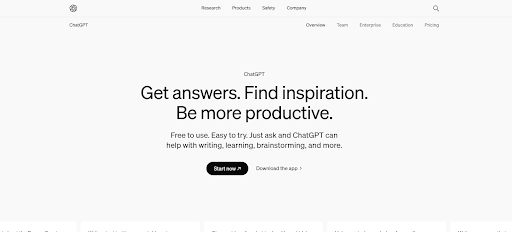
ChatGPT

A product of OpenAI, ChatGPT is an AI language model that generates human-like text responses based on the input it receives.

Key Features:

  • Natural Language Understanding: ChatGPT can comprehend and respond to complex queries naturally and coherently.
  • Adaptability: It is versatile and can used across various domains, including customer support, content creation, and more.
  • Continuous Learning: The more you interact with it, the better it gets, making it a constantly improving tool.

Benefits:

ChatGPT’s adaptability and continuous learning make it a valuable asset for businesses looking to automate routine tasks and enhance customer interactions.
Learn how businesses are using ChatGPT to grow in 2026 and why it’s such a reliable and efficient AI assistant.

with a highly reliable and efficient AI assistant?. 

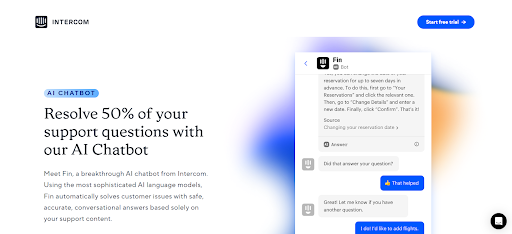
Intercom’s Fin

Fin by Intercom is designed to streamline customer support operations by automating responses to common customer queries.

Key Features:

  • Customer Support Automation: Handles up to 50% of incoming customer queries automatically.
  • Contextual Understanding: Maintains the context of conversations for more natural and effective interactions.
  • Seamless Integration: Integrates well with Intercom’s existing suite of tools, enhancing overall workflow efficiency.

Benefits:

Fin is a game-changer for customer support teams. It allows them to focus on more complex issues while ensuring customers receive quick and accurate responses to their common questions?.

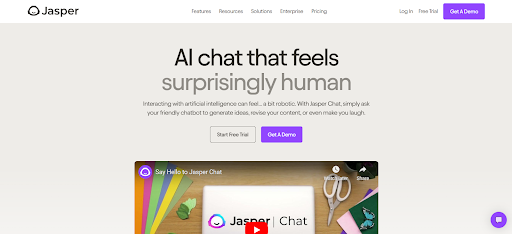
Jasper Chat

Jasper Chat is designed to assist with various writing tasks, from drafting emails to creating social media posts.

Key Features:

  • Content Creation Assistance: Helps generate various types of content quickly and efficiently.
  • Search Engine Optimization: Offers keyword suggestions and optimization tips to ensure content ranks well on search engines.
  • Tone and Style Adaptability: It can adapt its writing style to match your brand’s voice, ensuring consistency and personalization.

Benefits:

For marketing professionals, Jasper Chat is an essential tool. It not only speeds up the content creation process but also enhances the quality and effectiveness of marketing materials by ensuring they are optimized for search engines and aligned with brand guidelines?.

Best AI Voice Generators

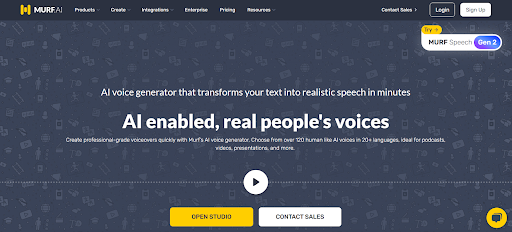
Murf AI

Murf AI is a sophisticated AI voice generator that creates lifelike voices for various applications, such as podcasts, videos, and presentations.

Key Features:

  • Extensive Voice Library: Over 120 voices in multiple languages to choose from.
  • Voice Cloning: Ability to clone voices to create personalized content.
  • Voice Emphasis Controls: You can fine-tune pitch, speed, and tone.
  • Third-Party Integration: Works with tools like Google Slides, Canva, Adobe Audition, and more.

Benefits:

Murf AI stands out by producing studio-level voiceovers that ensure high-quality output. Its versatility makes it suitable for a wide range of content types, including educational and corporate materials.

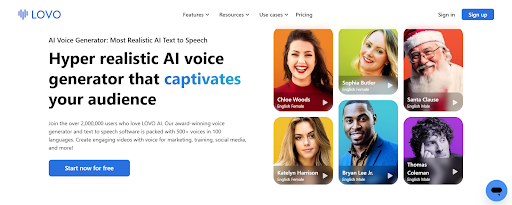
LOVO AI

LOVO AI specializes in AI-generated voices, offering tools for text-to-speech conversion, voice cloning, and content creation.

Key Features:

  • Extensive Voice Library: Over 500 voices in 100+ languages.
  • AI Script Writer: Generates scripts quickly using AI.
  • Video Editor: Integrates voiceovers with video content seamlessly.
  • Voice Cloning: Allows you to clone your own voice.

Benefits:

LOVO AI allows for extensive customization, enabling you to fine-tune voices by adjusting emotional tones, pronunciations, speed, and intonation. This versatility and user-friendly design significantly reduce the time required to produce high-quality audio and video content?. 

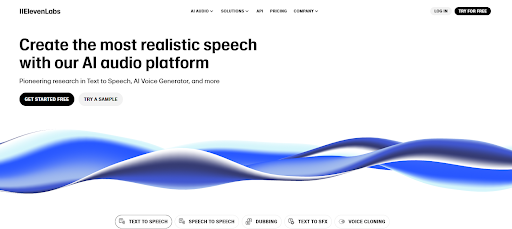
ElevenLabs

ElevenLabs is an AI voice generation software that produces highly natural and fluent synthetic voices that can be used as voiceovers, audiobooks, virtual assistants, and more.

Key Features:

  • Speech Synthesis: Converts text and audio into lifelike speech.
  • VoiceLab: Allows creation and customization of unique voices.
  • AI Dubbing: Translates and dubs existing videos.

Benefits:

Eleven Labs delivers high-quality, natural-sounding AI voices, making it ideal for various content types. Its accessible plans include advanced features like voice cloning without requiring high-tier subscriptions, offering great value.

Best AI Art and Image Generators

Midjourney

Midjourney is an AI-driven art generation tool designed for creative individuals and professionals. Simple text prompts enable you to produce images in many styles, from photorealistic to abstract.

Key Features:

  • High-quality Settings: It offers various model versions, including specialized models for different art styles, such as Japanese Anime and Manga.
  • Community-focused: Operates via Discord, fostering a vibrant community where users can share and discuss their creations.
  • Adaptive Canvas: Can generate a wide range of styles and high-resolution images, making it highly adaptable to user needs.

Benefits:

Midjourney is ideal for creative individuals and professionals who want to explore diverse artistic styles and engage with a community of like-minded users. However, it requires a subscription, and its Discord-based interface may be a learning curve for some.

Canva AI

Canva’s Magic Studio suite leverages AI to simplify and enhance the creation of visuals.

Key Features:

  • AI Photo Editor: Canva AI integration allows you to transform photos, erase clutter and background noise, and fine-tune your images at the touch of a button.
  • User-friendly Interface: As part of Canva’s Magic Studio suite, the AI tool is designed to be intuitive and accessible, even for users with no prior design experience.
  • Variety of Templates: It offers an extensive library of templates and design elements, empowering users to enhance their creativity and easily produce professional-quality visuals.

Benefits: 

Canva is perfect for designers, content creators, and businesses requiring quick, high-quality visuals. Its user-friendly interface and powerful AI capabilities support many professional and creative applications, ensuring you can produce captivating assets with minimal effort. This tool is especially valuable for those looking to streamline their design process while maintaining high visual quality standards.

Best AI Paid Media Tools

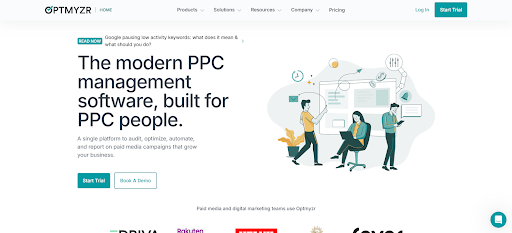
Optmyzr

Optmyzr is a powerful tool designed to manage and optimize PPC campaigns

Key Features:

  • Bulk Editing: Allows for multiple changes across campaigns quickly.
  • Account Management: Manage, edit, and view multiple Google Ads accounts simultaneously.
  • Optimization Suggestions: Provides actionable recommendations to improve campaign performance.
  • Integration: Works well with Google Sheets, Google Analytics, and other Google tools.

Benefits: 

Optmyzr is highly user-friendly, making it perfect for beginners. It enhances efficiency by automating tasks and supporting bulk editing, significantly reducing manual work. The platform provides insightful analytics for fine-tuning campaign performance and is cost-effective, helping manage budgets efficiently by optimizing bids and other elements.

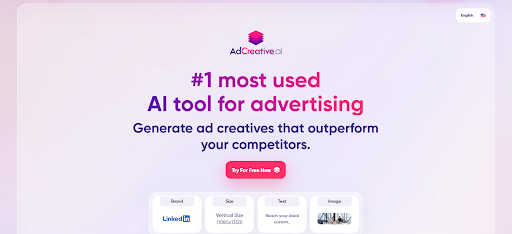
AdCreative.ai

AdCreative.ai specializes in generating AI-driven ads and marketing materials quickly and efficiently. 

Key Features:

  • AI-Generated Ads: Creates professional-grade ads based on user inputs.
  • Copy and Caption Generation: Produces compelling ad copy and captions.
  • Performance Tracking: Monitors how audiences engage with ads and optimize future ads using machine learning.
  • Versatile Formats: Supports the creation of images, banners, and videos.

Benefits: 

AdCreative.ai saves you valuable time with its rapid ad creation process. It leverages data and machine learning to continuously improve ad performance. Additionally, it supports multi-platform ad creation, ensuring a wide reach across various advertising channels.

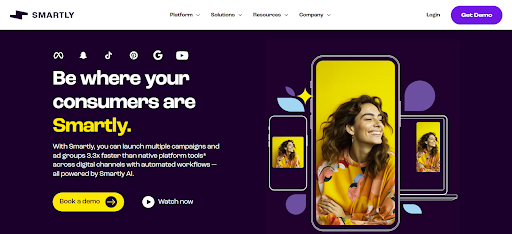
Smartly.io

Smartly.io is a platform that automates the creation and management of advertising campaigns. It is highly regarded for its ability to handle large-scale ad operations for big brands.

Key Features:

  • Ad Creation: Facilitates the creation of image and video ads using numerous templates.
  • Campaign Management: Allows for the simultaneous management of multiple campaigns.
  • Analytics and Reporting: Provides detailed data and reports on ad performance.
  • Brand Compliance: Ensures ads adhere to brand guidelines and assets.

Benefits: 

Smartly.io offers excellent scalability, making it ideal for large businesses with extensive advertising needs. It boosts efficiency by automating many aspects of ad production and campaign management. The platforms use data-driven insights to optimize advertising strategies, improving overall campaign effectiveness.

Best AI Sales Tools

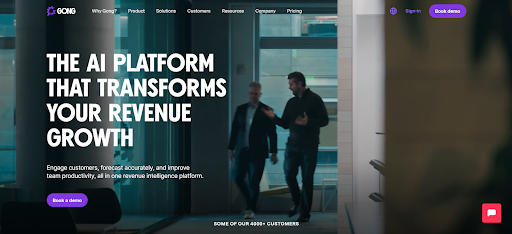
Gong.io

Gong.io is an AI-powered conversation analytics tool that analyzes sales calls, meetings, and emails to provide deep insights into sales interactions.

Key Features:

  • Call Recording & Transcription: Automatically captures and transcribes sales calls for easy reference.
  • Conversation Intelligence: Identifies key moments, talk ratios, and trends in sales conversations.
  • Deal Risk Alerts: Notifies you when deals are in danger, allowing proactive intervention.
  • Sales Coaching: Provides personalized feedback based on real-world data.
  • Market Intelligence: Understands industry trends and competitor strategies.

Benefits: 

Gong delivers enhanced insights into sales conversations, offering unparalleled visibility into sales interactions. By analyzing detailed conversations, it helps sales reps enhance their performance. Gong can also integrate seamlessly with popular CRM platforms, ensuring smooth workflow integration and data consistency.

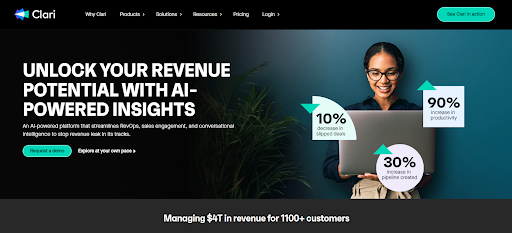
Clari

Clari is a revenue operations platform that provides AI-powered insights for optimizing sales performance and improving revenue predictability.

Key Features:

  • Automated Activity & Relationship Tracking: Eliminates manual data entry.
  • Sales Process Visualization: Provides a panoramic view of the entire sales process.
  • Real-Time Coaching: Delivers actionable insights and alerts in real time.
  • Mutual Action Plans: Enhances collaboration between sales teams and buyers.
  • Integration: Seamlessly integrates with CRM and other sales tools.

Benefits: 

Clari provides accurate sales forecasts and predictive analytics, ensuring reliable planning. It can enhance pipeline management by identifying bottlenecks and facilitating smooth sales processes. Clari also promotes enhanced collaboration through mutual action plans and supports data-driven decisions with real-time insights, helping teams make informed choices effectively.

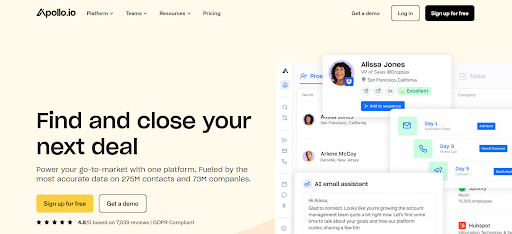
Apollo AI

Apollo AI is a comprehensive sales engagement platform that combines lead generation, email tracking, and sales automation.

Key Features:

  • Extensive Contacts Database: It has access to over 265 million contacts.
  • Email Tracking:> Monitors email opens, click-through rates, and responses.
  • Personalized Outreach: Uses AI to craft hyper-personalized emails.
  • CRM Integration: Ensures reliable data coordination and teamwork.
  • Automation: Simplifies outreach efforts and shortens sales cycles.

Benefits: 

Apollo offers comprehensive tools for sales engagement, streamlining various aspects of the sales process. It easily integrates with existing CRM systems, ensuring smooth workflow integration. Plus, it simplifies and automates outreach efforts, improving efficiency and productivity.

Best AI Tools For Productivity

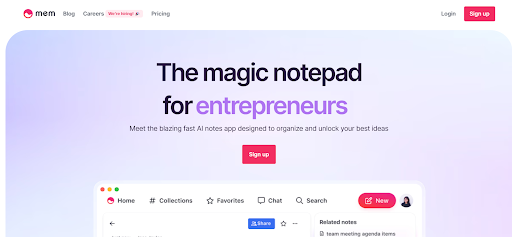
Mem

Mem is an AI-powered note-taking app that organizes and connects your notes automatically.

Key Features:

  • AI Tagging: Automatically tags and links notes.
  • Powerful Search: Easily find and retrieve notes.
  • Integration with Calendar: Syncs notes with your calendar for better organization.

Benefits: 

Mem offers effortless organization, automatically keeping your notes well-structured without manual effort. It enhances accessibility by making it quick and easy to find and use your notes whenever needed.

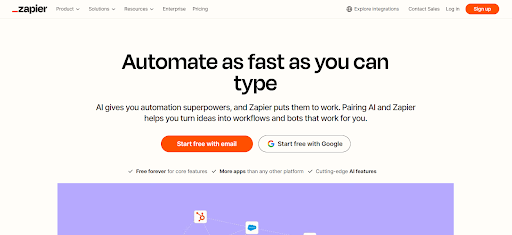
Zapier

Zapier is a workflow automation tool that connects different apps and automates tasks.

Key Features:

  • Custom Workflows: Create automation workflows without coding.
  • Wide Integration: Supports over 2,000 apps.
  • Conditional Logic: Automate tasks based on specific triggers and conditions.

Benefits: 

Zapier increases efficiency by reducing manual tasks and minimizing errors through automation. It is highly versatile, capable of automating a wide range of processes across various platforms, making it an invaluable tool for streamlining workflows.

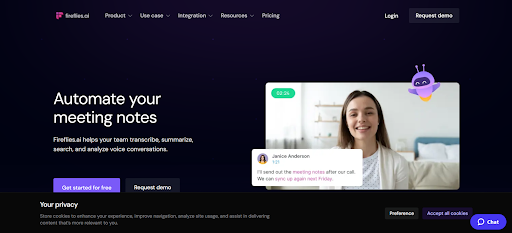
Fireflies.ai

Fireflies.ai is an AI tool that transcribes meetings and generates detailed notes.

Key Features:

  • Real-Time Transcription: Transcribes calls and meetings in real time.
  • Smart Summaries: Provides highlights, action items, and clickable timestamps.
  • Versatile Sharing: Easily share transcripts via links or QR codes.

Benefits: 

Fireflies improves meeting productivity by capturing important details without the need for manual note-taking. It facilitates collaboration through easy sharing and access to meeting notes, ensuring all team members stay informed and engaged.

Final Thoughts

The transformative impact of AI in 2024 is undeniable, revolutionizing productivity across various sectors. From sales and marketing to workflow automation and meeting efficiency, AI tools are enabling businesses to operate more effectively.

Take the first step towards a more efficient future by trying out these tools and experiencing their benefits firsthand.

And If you’re looking to elevate your brand’s digital presence further, consider partnering with GeistM. Our team of growth and content marketing experts is dedicated to driving results through data-driven insights. 

Written By: Shannon Purcell-Miggan

Visual Storytelling Strategies To Captivate Your Audience

Visual content is more than just an attention-grabber; it’s a powerful tool for conveying your brand’s story and forging a deep connection with your audience. 

In today’s fast-paced digital landscape, captivating visuals are essential for making an immediate impact. They’re more engaging than text alone, capture attention quicker, and can hold it longer. This is especially important since attention spans are getting shorter and shorter. 

Big digital advertising agencies understand the importance and power of ad creatives and invest tons of time and money into creating them. 

Before we delve into some effective visual storytelling strategies that can up your creative marketing game, let’s talk about the core principles of visual content and how it can elevate your brand’s narrative.

The Power of Visual Content and the Science Behind It

Visual content — like images, videos, UGC, and graphics — plays an important role in storytelling and emotional engagement. Our brains process visuals at astonishing speeds, with research indicating that images can be understood in as little as 13 milliseconds.

Here’s why visual content is indispensable:

  • Memory Retention: Visuals enhance memory retention. After three days, people remember about 65% of visual content compared to just 10% of text.
  • Emotional Resonance: Visuals evoke emotions more effectively than words, creating a lasting impact.
  • Increased Shareability: Visual content is more likely to be shared on social media, increasing a brand’s reach and visibility.
  • Boosts Conversion Rates: Visual content can influence purchasing decisions. High-quality images and videos of products or services can enhance their appeal, leading to higher conversion rates. The same goes for authentic UGC.
  • Instant Storytelling: A single image can tell a complex story instantly, without lengthy explanations. We all know the saying that an image says more than a thousand words.
  • Attention-grabbing: Visuals naturally draw attention, making them the first thing people notice online.
  • Humanizes the Brand: Visuals, especially user-generated content that shows behind-the-scenes content or customer stories, can humanize a brand. This helps in building trust and a more personal connection with the audience.

Understanding these psychological principles is crucial for creating compelling visual content.

Visual Creative Marketing Strategies to Captivate Your Audience

Exploring various forms of visual content can uncover innovative ways to engage your audience. Here are some tips that can help you boost your performance. 

1. Focus on the story, not just the visuals.

Visual storytelling goes beyond mere images. Visuals should weave a clear and consistent narrative for your brand. Even if each visual asset doesn’t convey an obvious story on its own, your audience should be able to follow the overall narrative.

Our advice? Think like a storyteller. What is the message you want to convey? Then plan your visual media to represent and relate this message across all your platforms.

We love how the mindfulness app Calm executes this. 

https://www.instagram.com/reel/C9xYZeyORMh/?utm_source=ig_web_copy_link&igsh=MzRlODBiNWFlZA==

2. Capture Authentic Moments with Photos.

Photos serve as windows into the past, connecting your audience with the emotions and experiences captured in each frame. Whether it’s a candid team shot or a stunning product photo, images build authenticity and trust.

Dove’s #TurnYourBack campaign used simple yet powerful photos to raise awareness about the negative effects of social media filters. These images helped drive deeper connections while championing a cause.

https://www.instagram.com/dove/p/CpgUo0fvJdh/?img_index=1

3. Align Your Visual Storytelling with Your Marketing Content Strategy.

Simply posting a photo or video online and waiting for results to flood in is not a strategy. Nor is relying on the hope that your visual content will go viral — it most likely will not. Like any content marketing format, visual storytelling requires an effective strategy to convert views into conversions. 

Before your creative team starts brainstorming, ensure they address these crucial questions:

  • What are we trying to accomplish with our visual content?
  • Who is our target audience? What types of content experiences engage them?
  • What problems does our brand solve?
  • What is our vision of what makes our brand unique? How can we communicate these messages compellingly and consistently?
  • What metrics will we use to measure success? For which search terms should this image appear in search engine results?

Photo Via: Tinder

4. Simplify Complexity With Graphics

Graphics, such as charts and data visualizations, transform complex data into engaging visual stories. They make information more accessible and understandable, cutting through the noise with clarity.

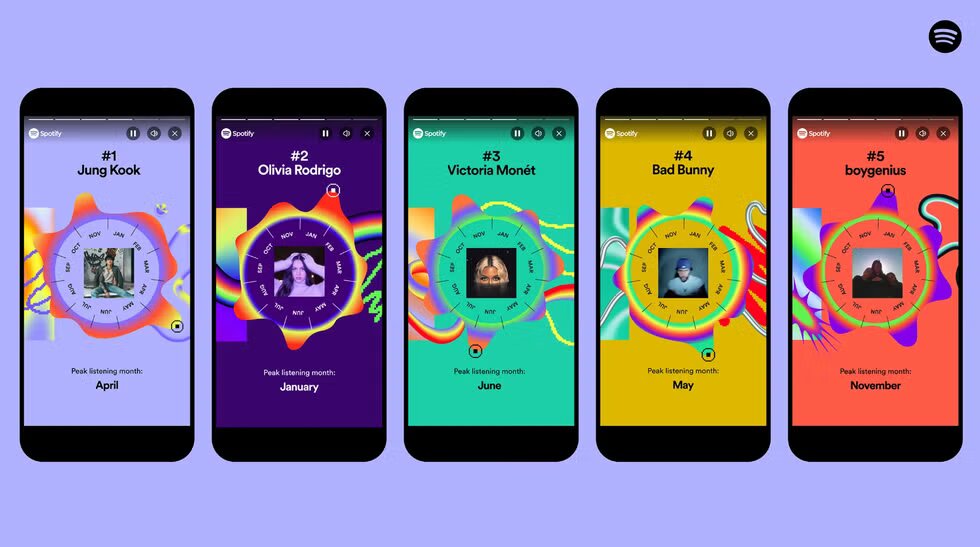
We’re big fans of Spotify’s Wrapped campaign, which offers customers a personalized recap of their music journey. Using vibrant colors and striking graphics, Spotify transforms each user’s listening history into a fun and highly shareable data story.

Photo Via: Cosmopolitan

5. Dynamic Storytelling with Video Formats

Videos combine moving images and sound to create a multisensory storytelling experience. Whether you create short clips like Memes that are humorous and highly shareable and can spread your message quickly or you hire a UGC creator to create authentic videos that gain trust — videos are versatile and impactful. They should play a major role in your overall marketing strategy. 

Embracing Visual Storytelling

Mastering visual storytelling enables you to capture attention, evoke emotions, build trust, and inspire action. It’s a highly powerful medium to convey your message and leave a lasting impression on your audience in an ever-evolving digital world when done correctly. Building a high-level visual storytelling marketing strategy takes experience and expertise, which is where digital advertising agencies and creative marketing agencies can step in. 

How can GeistM help?

At GeistM, we excel in enhancing visual storytelling strategies to maximize conversions through innovative and engaging content. Our expertise in user-generated content (UGC) videos allows us to create authentic and trustworthy visuals that resonate deeply with your audience, and combined with our unique content strategy they can help you to maximize results. 

Additionally, our comprehensive approach includes utilizing memes, infographics, animations, and other dynamic video content to ensure your brand’s story is compellingly told across all platforms, ultimately leading to higher engagement and increased conversion rates.If you’re ready to take your storytelling to the next level, contact us today.

Written By: Julia Steiner

UGC vs Influencers: What’s Right For Your Ads Strategy

Have you ever stumbled across a social media post that you didn’t initially realize was an ad? Chances are, you’ve been exposed to User-Generated Content (UGC) and Influencer Marketing without even realizing it.

In today’s digital age, authenticity reigns supreme. UGC and Influencer Marketing serve as two powerful tools for brands to connect with audiences in a genuine and impactful way. From unboxing to day-in-the-life videos, everyday consumers and social media influencers are reshaping the way brands are driving engagement and how they’re perceived.

Here’s a breakdown of everything you need to know about UGC and Influencer Marketing:

What Is UGC?

UGC (User-Generated Content) is a style of photography and video typically shot using an iPhone, providing an unpolished, authentic vibe. The results offer a glimpse of what a product or service actually looks like in a real-life situation. Rather than deal with the expenses and hassle of a professional photoshoot, UGC is an affordable and successful method of creating compelling assets for social.

What Is Influencer Marketing?

Influencer Marketing involves partnering with content creators who have strong online presences and loyal audiences of potential customers. Think of influencer marketing as mini celebrity endorsements. This strategy can help you build brand awareness and generate more conversions by reaching a variety of audiences. Users can be more likely to convert if someone they follow and admire endorses the product. Because influencers specialize in crafting digital content, they can produce ads that seamlessly blend in with users’ feeds. 

*An important note: Influencers can create UGC-style ads, but not all UGC needs to originate with influencers. 

UGC vs. Influencer Marketing:

UGC is a highly affordable and agile strategy for brands to create engaging content. Influencer marketing, on the other hand, can require more budget depending on the size of the creator. 

Although UGC is a relatively simple concept, there are nuances and advanced approaches you can take to optimize results. UGC Creators are individuals who specialize in crafting authentic content that can be used by brands in their paid social strategy. They charge significantly less than influencers; with influencers, you’re paying for exposure and the ability to reach a new audience. 

With UGC creators, content is created for your brand, and your brand only — it’s not posted on the creators’ channels. Generally, the brand has full control over what is created based on the brand’s strategy and content goals.  

Influencers are valuable to brands because of their online presence. The bigger the following, the higher the cost, but also the higher the chances a product or service is seen by a new audience. Promoting products in their own distinct style that their followers know and love makes influencers’ content easy to engage with.

Influencers generally post the ads they create to their own personal accounts in order to reach their particular audience. With UGC, brands post the content directly to their own feeds in order to build credibility and trust.

Which Strategy Is Right For You?

UGC

UGC works well for lifestyle products that consumers use daily. By portraying products in a natural setting, the end result feels more organic and native to users’ feeds. This strategy can also help third-party reviews appear more authentic and trustworthy. 

UGC — whether created in-house or with an agency like GeistM — gives your business more control over the final output. We work with creators to create engaging content based on clients’ needs and goals. From the script to the final edit, creators work closely with our expert team to ensure the final content piece will resonate with audiences.

Influencer Marketing

Influencer marketing is an exceptional strategy for brands trying to break into niche markets. Many influencers focus on one specific topic, like fashion, fitness, food, or wellness. Because their followers share a similar interest, brands can reach audiences that precisely match their desired demographic. When influencers showcase products, consumers can develop a more positive association and intensify their connection with the brand.

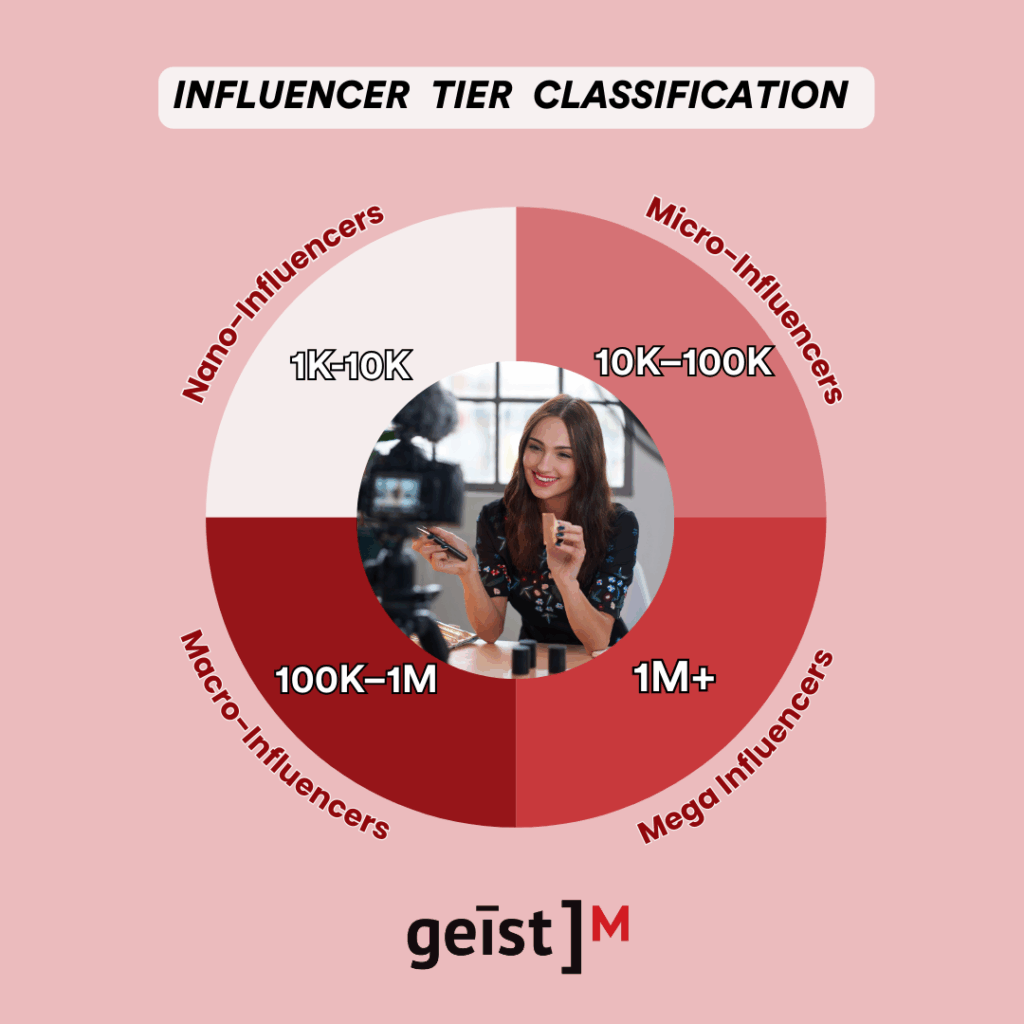
Influencers are categorized based on follower count:

Each of these groups have their own pros and cons. Nano and micro-influencers tend to have more engaged followings and charge much lower rates. Granted, their reach will be much smaller, but the higher engagement rates will make up for it. A recent study found that micro-influencers generate a 6% engagement rate on Instagram, compared to mega influencers’ 1.97% engagement rate.

Despite their high cost, partnering with macro and mega influencers also has a number of unique benefits. The first one obviously being their massive reach — getting millions of eyes on your product is invaluable for any brand. This can be great for quick sales and even garner earned media attention if the collaboration is large enough. 

GeistM Tip: Before partnering with an influencer, always check their engagement rates. Many large creators’ follower counts are not indicative of their actual reach (an account with 1 million followers that only averages a couple of hundred likes on each post is a red flag). So in order to ensure you’re getting your money’s worth, double-check whether their engagement adds up.

Overall, micro-influencers are definitely a more cost-effective option, so we only recommend partnering with macro and mega influencers if you’ve got large budgets or a specific goal in mind.

Key Takeaways

  • UGC is a cost-effective strategy for creating authentic, native content for paid media.
  • UGC is created specifically for a brand’s own platforms and ads, not posted on the creator’s channel.
  • Anyone can create UGC, but brands often work with dedicated UGC creators or agencies to meet specific needs.
  • Influencer marketing helps brands tap into niche audiences and build brand awareness.
  • Influencer marketing focuses on exposing a brand, product, or service to a new or different audience.
  • Influencers aim to influence their audience to purchase or engage, while UGC is produced for brand use, which explains the cost difference.
  • Micro-influencers offer higher engagement at lower budgets, while macro and mega influencers deliver broader reach.

Why Choose GeistM?

Are you interested in UGC or influencer marketing but don’t know where to start? GeistM is here to help. Our Growth Marketing experts will guide you based on your business and goals. We’ve developed hundreds of marketing strategies across dozens of industries and attained thousands of customers for our clients.

Our in-house creative team excels at creating beautiful UGC that will generate maximum engagement and conversion rates. We also regularly collaborate with UGC creators and influencers to help our clients’ reach specific demographics. With these tailored strategies, we pride ourselves on producing authentic content that drives serious results.

So, instead of struggling to figure this all out yourselves, contact us today!

Written by: Simon Kuflik